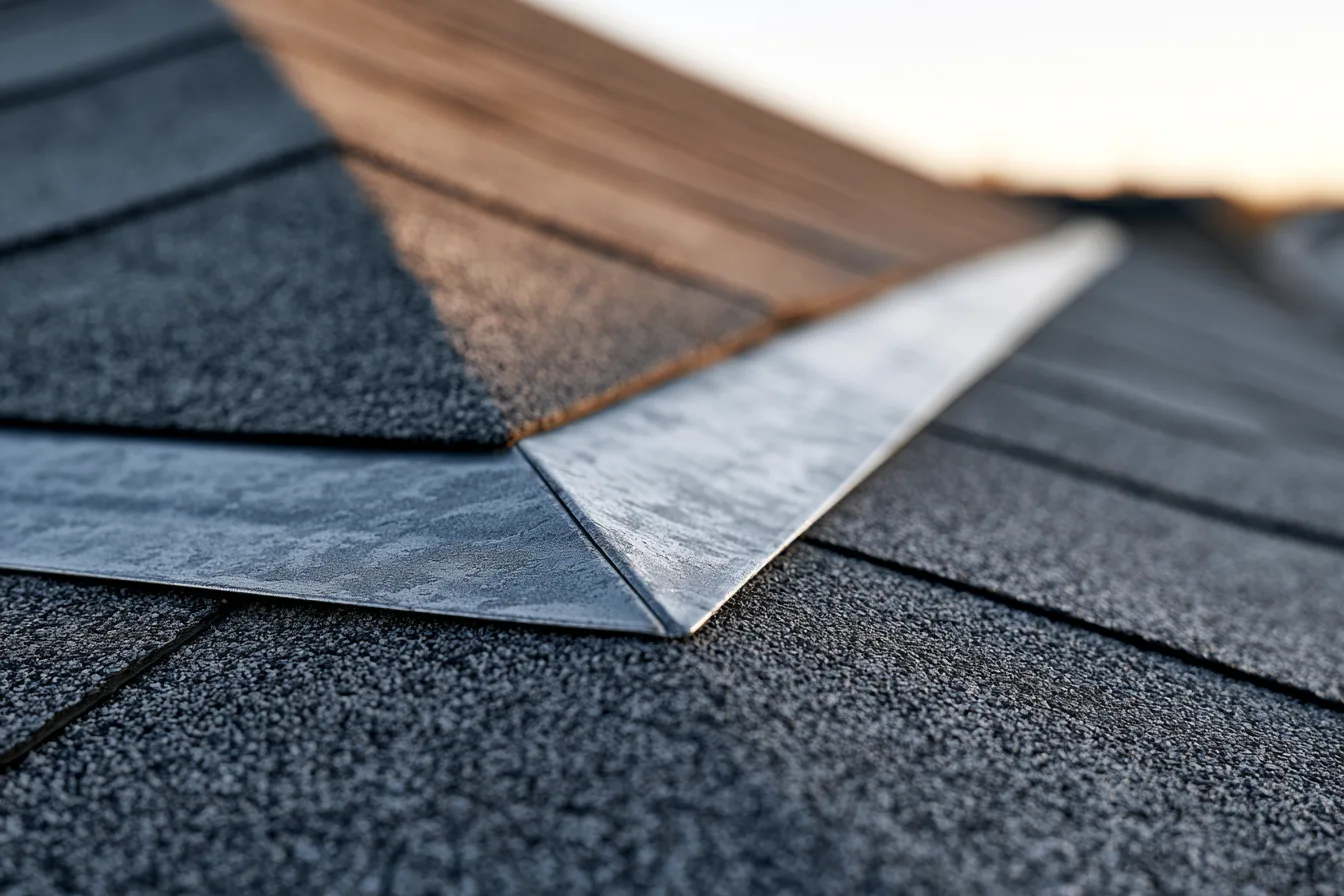
Roof Flashing Repair in Southlake, TX
Repair the joint where the roof meets a wall, chimney or opening. Properly connected flashing gives rain a route back onto the roof surface.
Southlake roof flashing repair at walls and chimneys
Shingles cover the open slope, but flashing handles the places where that slope meets something else. The metal pieces and their overlaps direct water past walls, chimneys and penetrations. An open joint there can leak even when the surrounding shingles still look good.
Flashing repair means understanding the connection beneath the visible edge. At a wall, the upper part must integrate with the wall finish; at the roof, it must overlap the covering in the right direction. A surface bead of sealant may close a small seam temporarily while leaving that underlying path wrong.
We inspect the failed joint and the adjoining material before deciding how much to open. The repair may need more than a new exposed metal piece if the base is deteriorated or the existing layers cannot be reconnected.
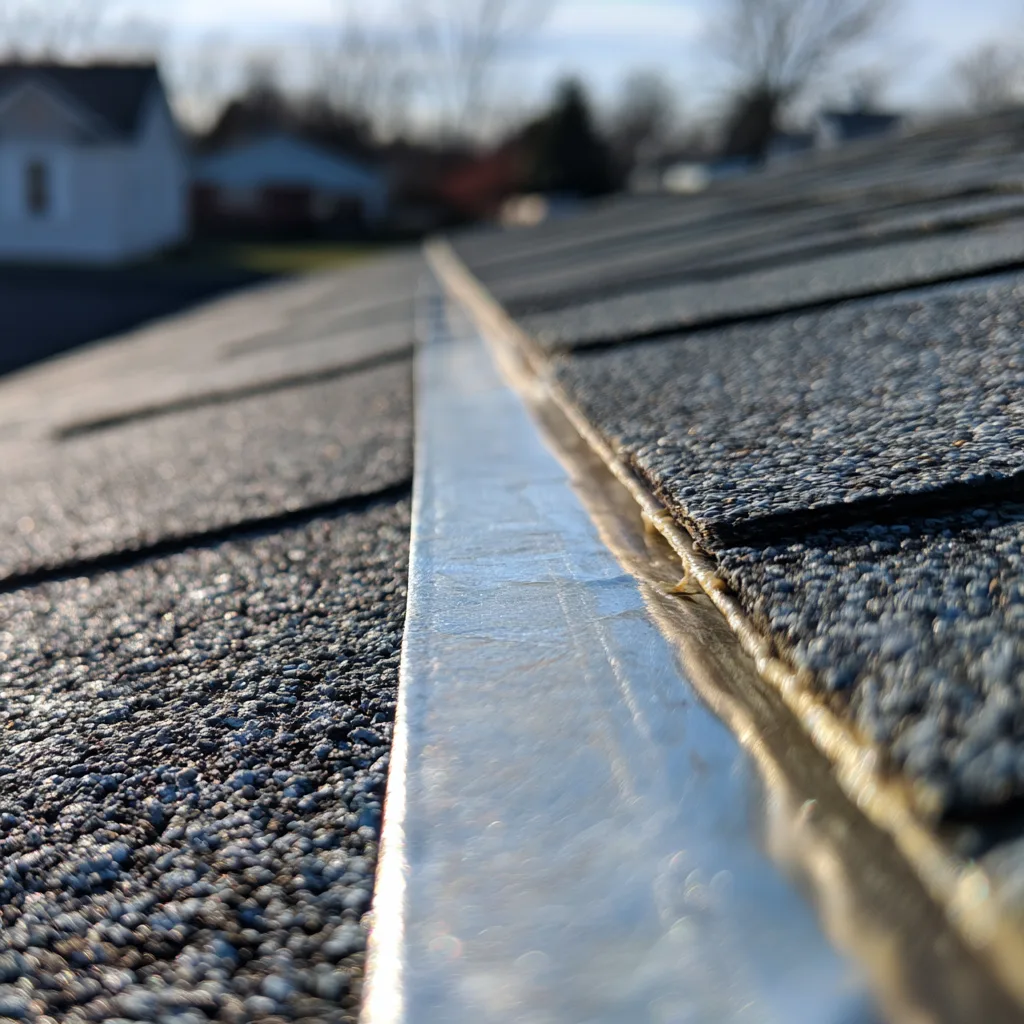
Which flashing connection failed
The right repair follows the type of joint. A chimney and a vent pipe do not use the same flashing assembly.
Rebuilding the roofing connection
Expose the connection
Remove enough covering to see how the existing flashing ties in. The damaged part may be hidden behind shingles or adjoining finishes. Planning that access helps avoid a repair that only covers the visible symptom.
Repair the base and integrate the layers
Check the supporting material and replace damaged pieces where needed. New flashing must work with the underlayment, covering and adjoining wall or chimney detail. Compatible metals and product details matter at those connections.
Finish without blocking the water path
Reinstall the surrounding roofing with the intended overlaps and clear outlets. Sealant has a role in specified joints, but a thick surface coating is not a substitute for correctly arranged layers. The finished detail needs to shed water without trapping it behind the repair.
Roof flashing FAQs
Can flashing be repaired without replacing the roof?
Often, when the nearby roofing is sound enough to open and reconnect. Brittle shingles, deteriorated decking or a larger failed junction can expand the repair. The condition around the joint determines the practical boundary.
Water is beside my chimney. Is flashing definitely the cause?
No. A chimney cap, masonry or mortar can also admit water above the roof. The roofing connection deserves inspection, but its location alone does not rule out a chimney defect. The repair should address the confirmed source.
Can new flashing match the existing roof color?
Available finishes and compatible coatings depend on the metal and exposure. Appearance can be considered after the correct material and connection are selected. Painting over corrosion or an open joint does not repair the underlying detail.
Why did sealing the joint not stop the leak?
Water may be entering behind the sealant or farther upslope. Movement can also reopen a surface bead. Inspecting the overlap and surrounding layers helps establish whether the joint needs rebuilding rather than another coating.