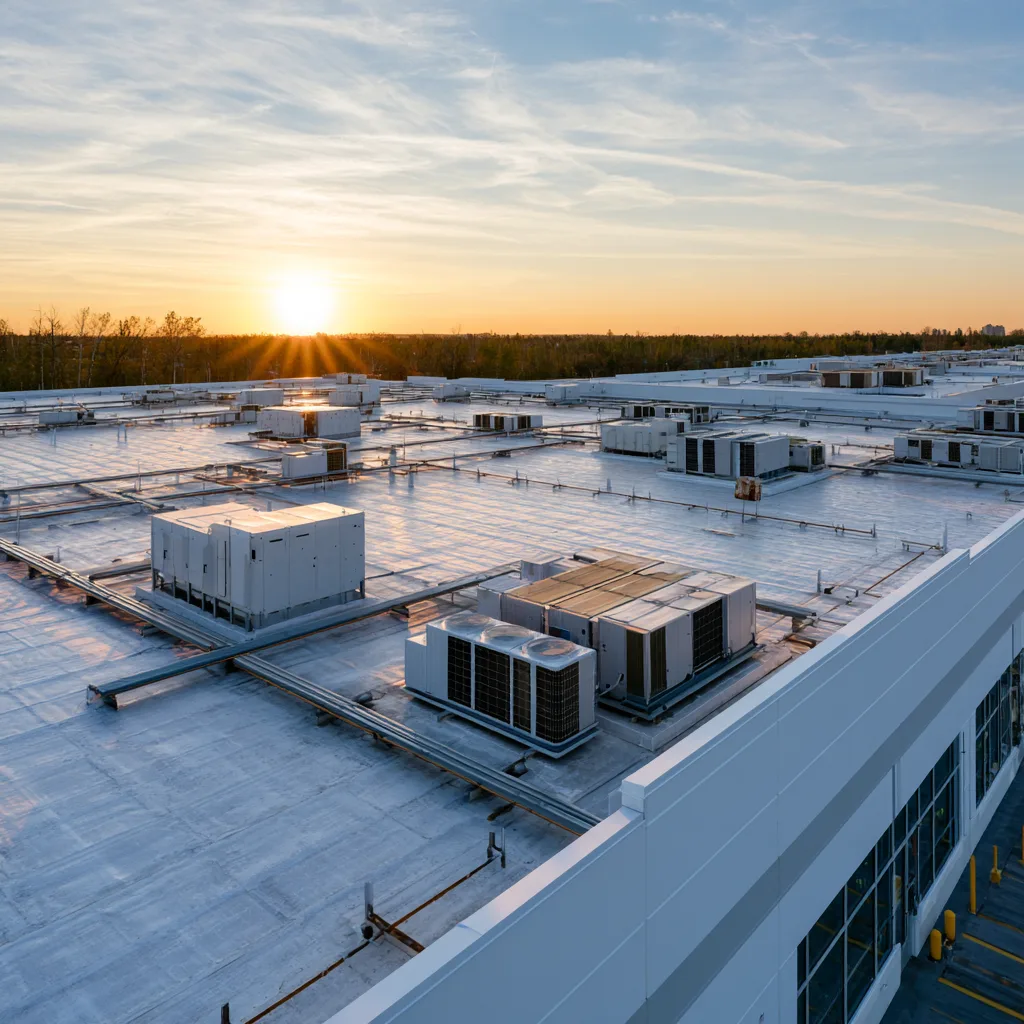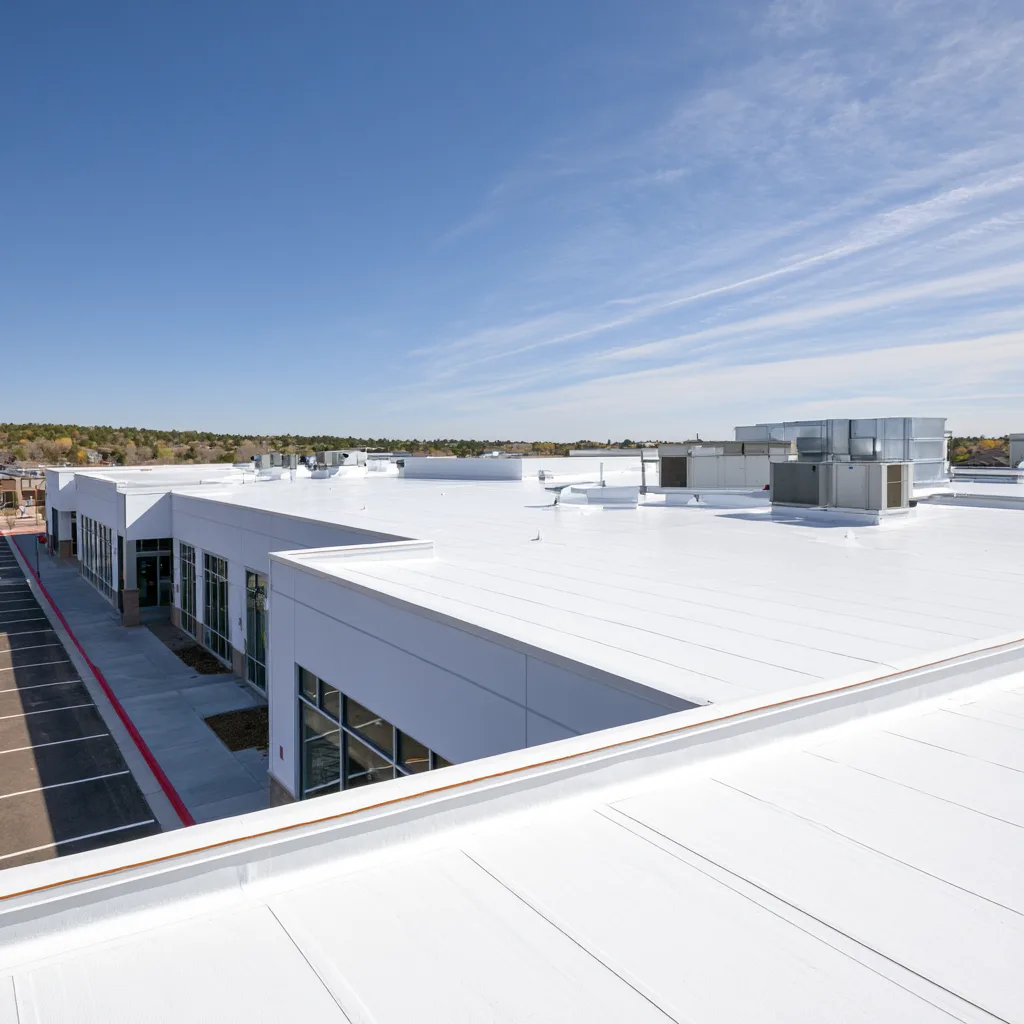
Commercial Roofing in Southlake, TX
Roof leaks, worn membranes and replacement planning for Southlake buildings. We connect the roof’s condition to the work and the way your property operates.
Commercial roof work starts with the building below
A leak above a tenant space is a roof problem and an operating problem. Before the work is planned, we need to understand what is below the affected area, how the roof is accessed and which equipment must stay available.
On a low-slope roof, we examine the membrane along with seams, perimeter edges, drains and the flashings around rooftop units. Water can move within the roofing layers before appearing inside. The opening in the surface and the condition beneath it both matter to the repair.
A focused repair, a restoration coating and a new roofing system do different jobs. We help establish whether the existing roof can support the proposed work. Coating over wet insulation or an unresolved drainage problem leaves the cause in place.
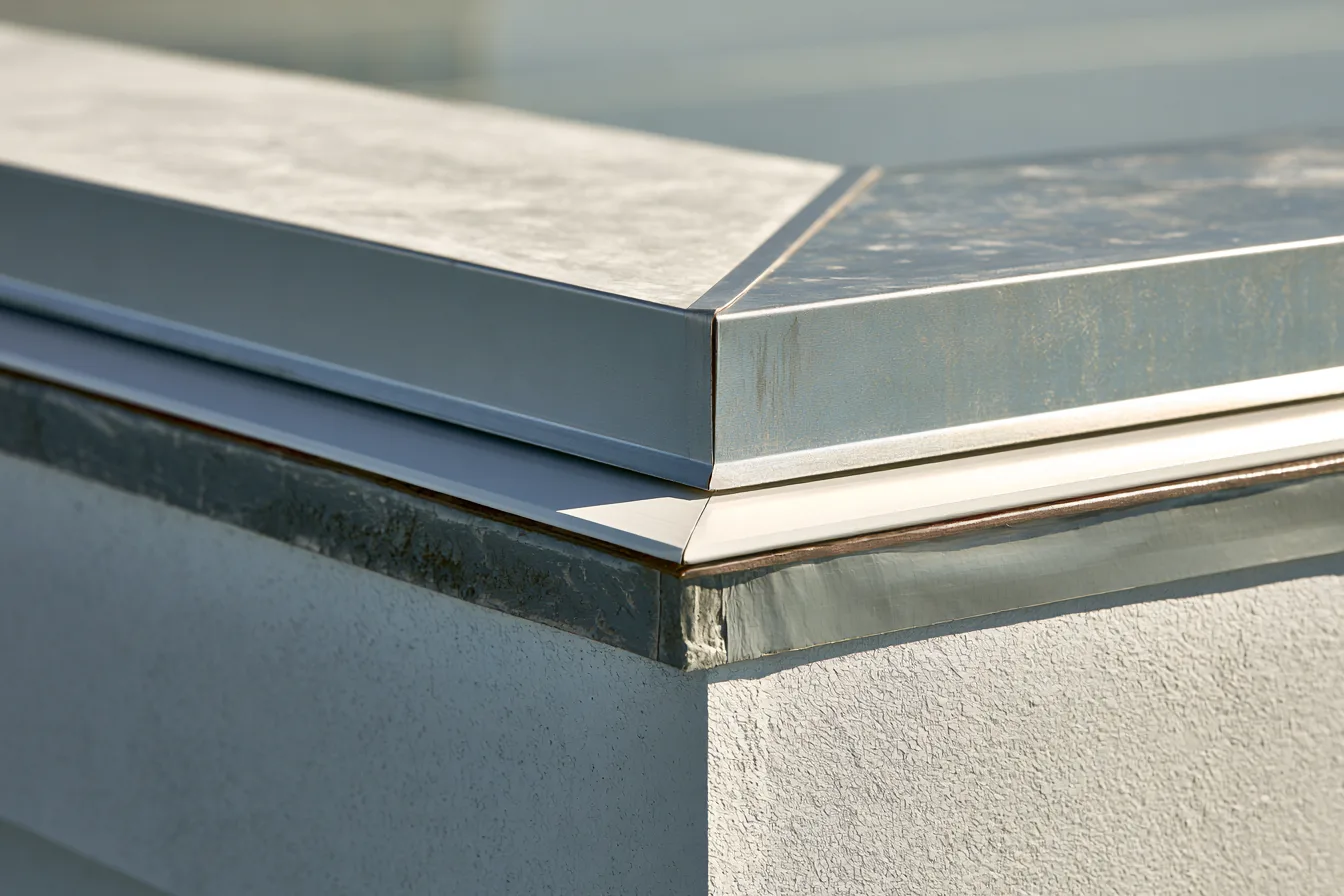
Commercial roofing systems and repairs
Choose the system or the work you are considering. Each option needs a roof-specific assessment.
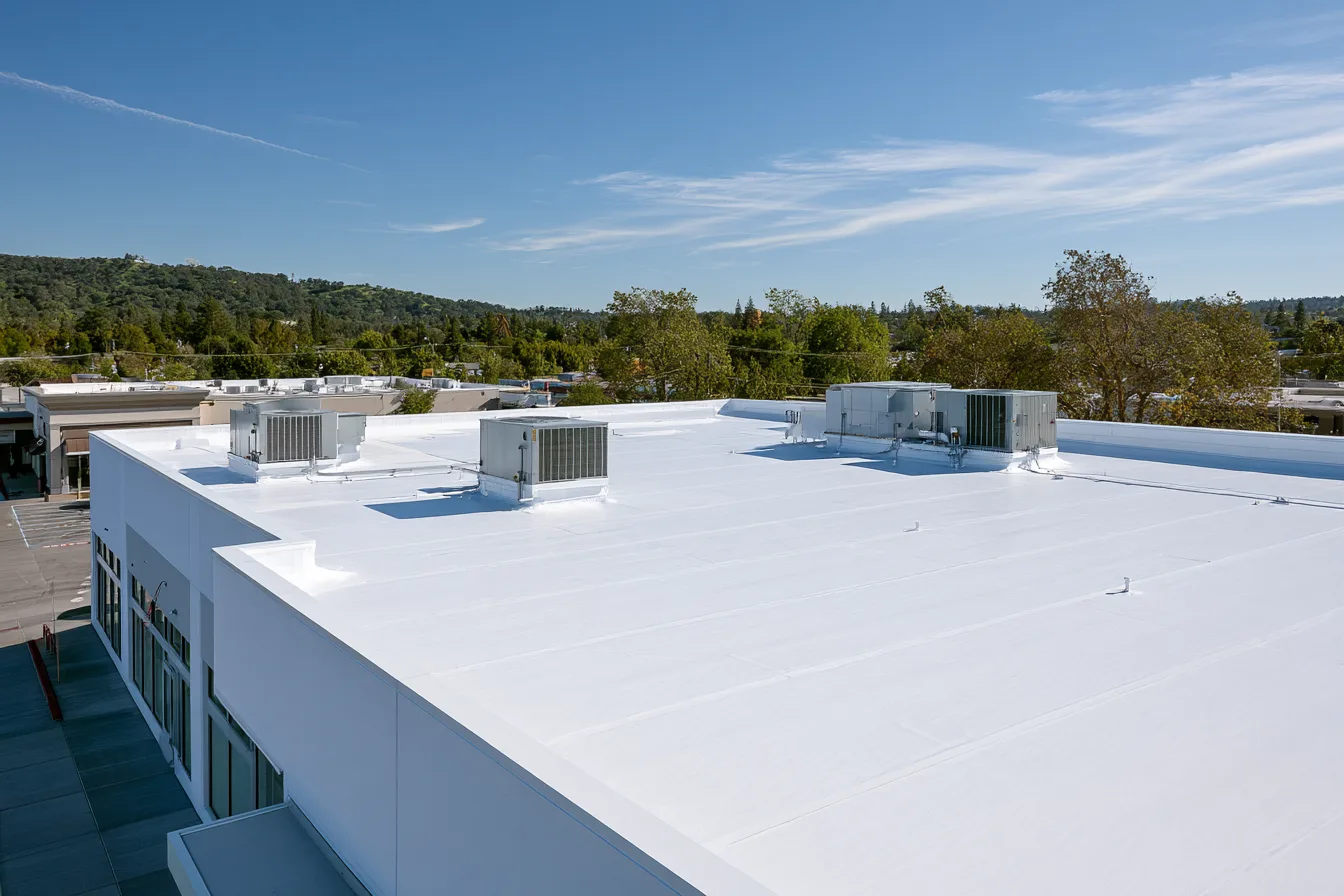
TPO Roofing
Address membrane seams, attachment, insulation and equipment curbs as one system.
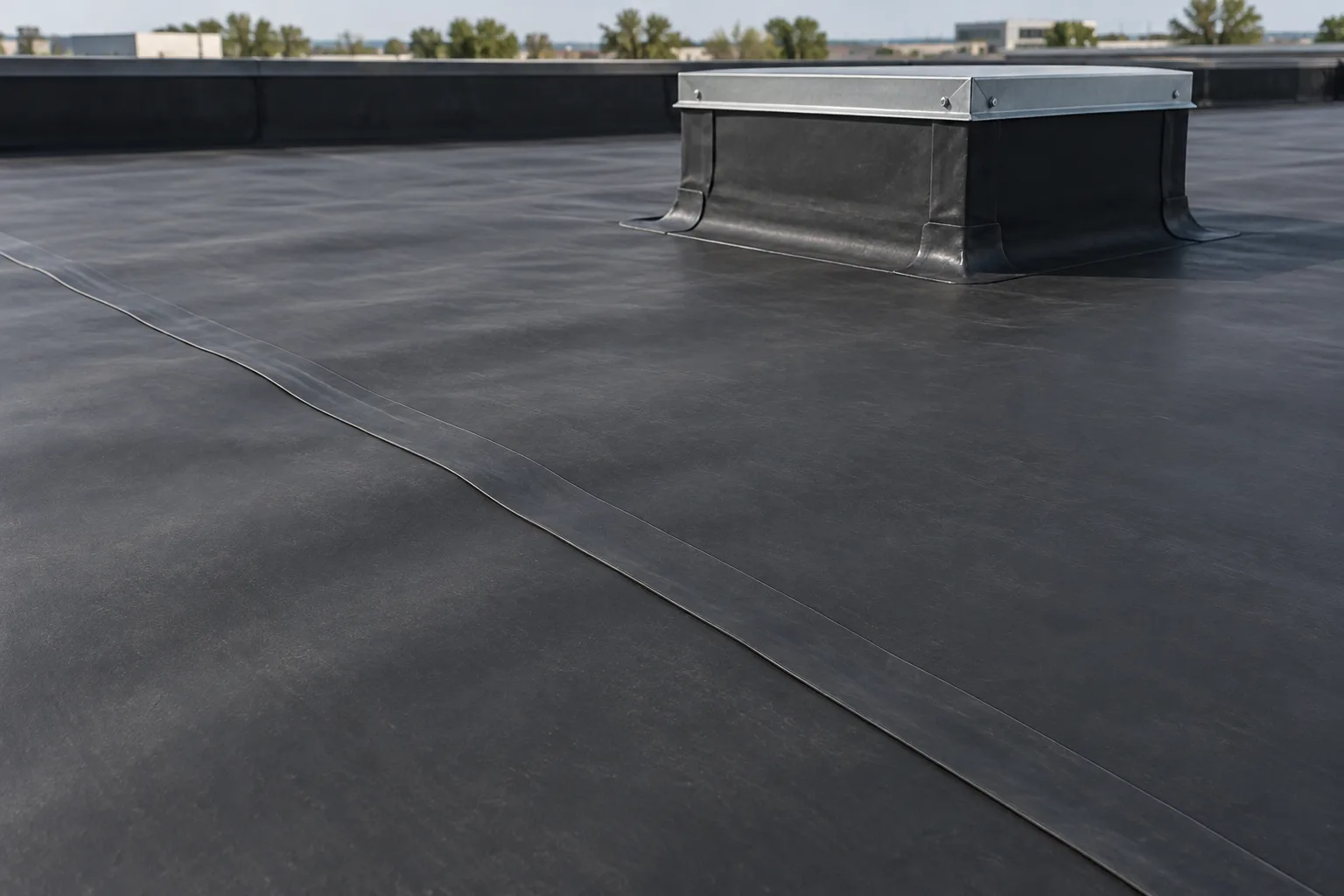
Flat Roof Repair
Trace leaks through membrane details and check the roof’s drainage.
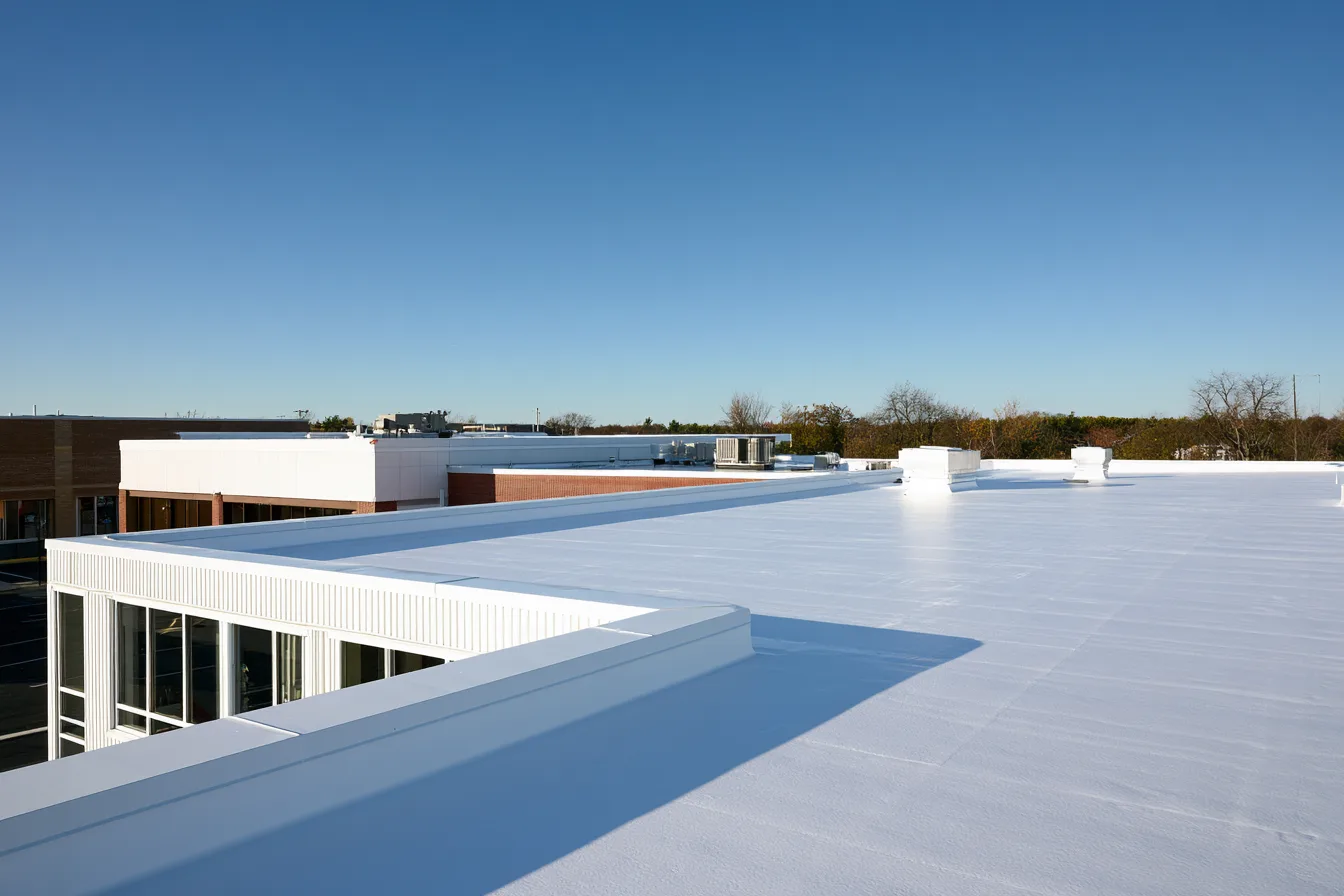
Roof Coatings
Restore a suitable roof after repairs, moisture checks and surface preparation.
Repair, restore or replace a Southlake commercial roof
The choice starts with the existing assembly. A dry, sound roof with a repairable detail presents a different project from widespread damaged layers.
Manufacturer guidance supports these suitability distinctions. GAF’s roof recover guidance explains why the existing assembly matters.
Plan roof work around an occupied building
A commercial roofing plan needs more than membrane area. The work must account for how people enter, use and service the building.
Access and occupied areas
Material deliveries, lifting areas and debris removal need a workable route. Tenant entrances, loading areas and walkways affect where work can be staged and protected.
Mechanical equipment and other trades
Roofing around a curb is distinct from the unit and its connections. Work that requires equipment movement or service must be coordinated with the appropriate mechanical trade.
Weather, noise and exposed roof areas
Work sequencing needs to account for the area opened, forecast conditions and the activities below. These affect the plan and schedule; a repair and full tear-off create different levels of disruption.
From a commercial roof walk to project scope
Start with the building location, the affected space and the roof system if you know it. We can begin even when the roof records are incomplete.
Look at the current concern
A free roof inspection examines accessible roofing and the relevant details. Tell us where the water appears and whether work on nearby equipment preceded it.
Establish what can remain
Surface condition alone cannot settle the moisture condition of all buried layers. Further investigation may be needed before choosing repair, recover or restoration.
Define the project and its limits
The work is organized around the system, drainage, access and the building’s use. Material and workmanship coverage depend on the actual system, issuer and project terms.
Southlake commercial roofing FAQs
Can a coating stop a commercial roof leak?
Existing leaks need to be located and repaired before a restoration coating is selected. Wet layers and drainage problems also need attention. A suitable coating protects a prepared roof; it does not replace the work needed beneath it.
Does a flat roof still need slope and drainage?
Yes. Low-slope roofs need a route for rain to reach drains, scuppers or gutters. Blocked outlets and low areas are different problems, so the repair plan needs to establish why water is remaining.
Can you help with a TPO roof?
Yes. TPO roofing work includes the sheet membrane, its seams and the details around openings and edges. The existing material, attachment and layers beneath it determine the repair or replacement approach.
Can I use the residential cost calculator for this building?
No. That tool uses a broad DFW asphalt-shingle planning range. Commercial membrane, insulation, attachment, equipment and access need their own project scope and pricing.